SaaS Information Architecture

Web Strategy, Usability Research
Project Context
An analytics software company approached my team during a period of explosive growth. With a suite of new products and ambitious goals for the coming year, they had outgrown their dated online presence and needed a way to showcase their capabilities.

Our team overhauled the company's digital presence, including a new visual identity, website, and content strategy.

I lead the initial content research and strategy. From an IA standpoint, the challenge was organizing a disparate set of existing pages while introducing prospects to a suite of new products.

Strategy
In the course of auditing existing content, we discovered a theme of redundancy - with multiple pages serving a similar purpose and attempting to say some variation of the same thing. The website was a wasted opportunity to educate and compel users.

For the new site, our content strategy focused on concision and clarity - squeezing the most mileage out of every ounce of content fuel. We prioritized hero content like an "Our Process'' page which walked users through how a complex series of products and services worked together to benefit clients. We also cleaned up navigation labels to organize similar pages and set expectations accordingly.

Product Launches

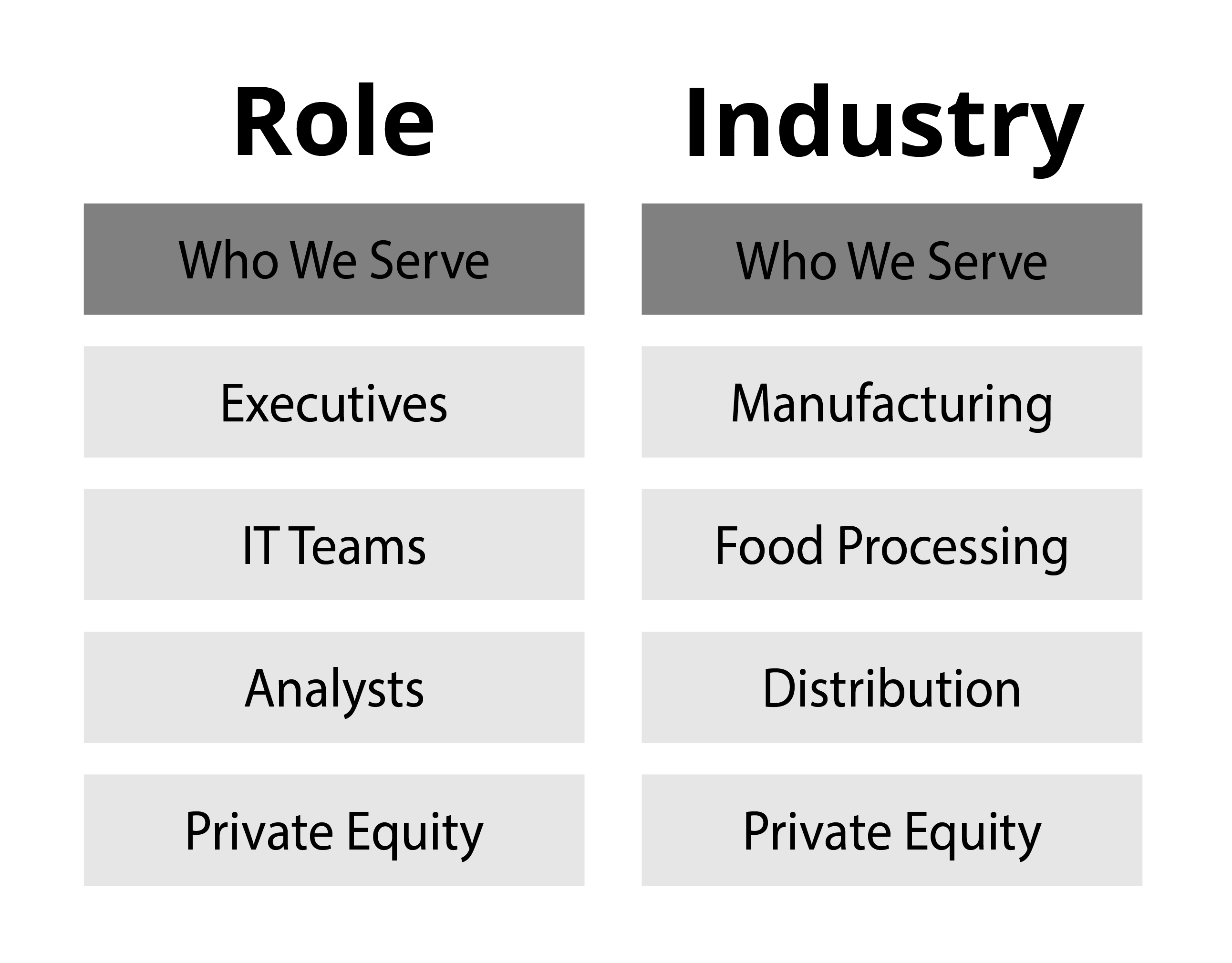
We introduced products within the context of their benefits to specific verticals. In our conversations with customers and stakeholders, we realized that the vast majority of users would be completely unfamiliar with the products and unaware of their benefits.

Our question was exactly how we should frame these benefits. A role-based architecture would allow us to reach out directly to the end user - from the executives who would be most interested in product dashboards to analysts who would compile and generate insights from data. An industry based architecture would focus on explaining the value proposition of vertical-specific needs.

We ultimately opted for the industry based model because it aligned more directly with existing content and could be better leveraged in future marketing campaigns.
On-page Optimization
Informed by tried and true usability research and context-specific insights, we outlined a page layout that would capitalize on SEO opportunities, maximize conversions, and help educate users as they moved through the buyer's journey.
Other work